
Stumps Removed Below the Surface
Stump Grinding in Lubbock for stumps near fences, sidewalks, and foundations on established lots
A stump left at grade after tree removal does not stay dormant—roots continue to occupy space under adjacent hardscape, and the wood draws pests as it decays. TX & NM Tree Service grinds stumps across Lubbock to approximately eight inches below grade as a standard depth, with deeper grinding available depending on what the site requires. Lots along Quaker Avenue and similar established corridors often have mature oak and elm stumps positioned close to fencing, sidewalks, or foundation edges, where the grinder has to work in a constrained footprint rather than with open access on all sides.
After the remaining trunk is cut as low as possible, the grinder works systematically across the stump face and out through the lateral root zone to the agreed depth. The machine follows the root structure rather than grinding only the visible surface, which is the step that separates a clean result from a stump that resprouts from undisturbed roots at the perimeter. The crew is fully insured, and Toby—a tree cutter with seventeen years of experience—is part of the team handling this work.
Request a free estimate by sending photos of the stump to TX & NM Tree Service at (806) 789-4297 before scheduling a site visit.
What the Grinding Process Actually Accomplishes
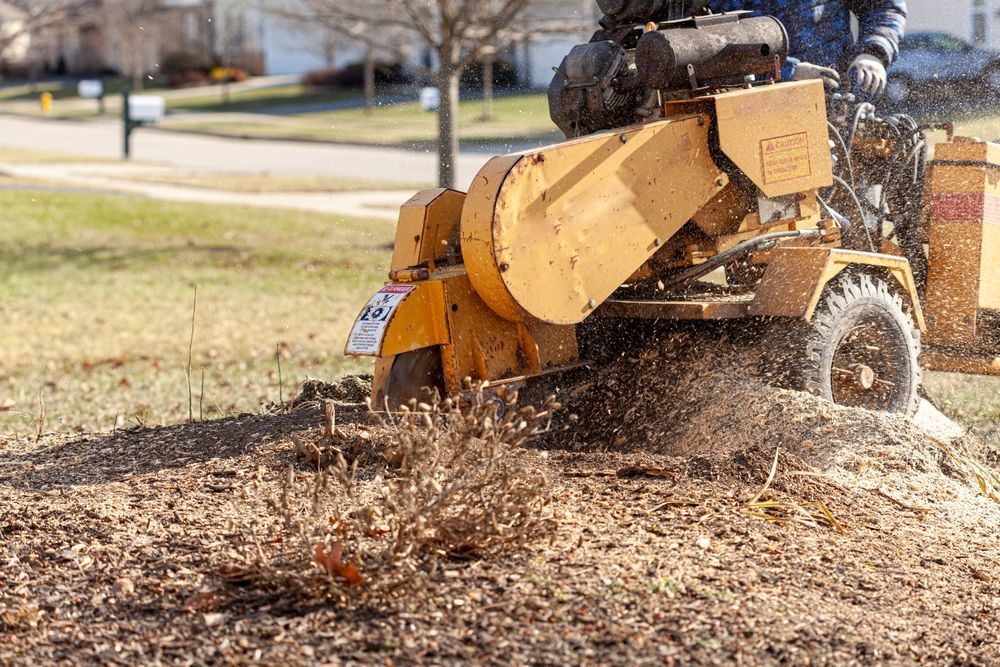
Stump grinding uses a rotating cutting wheel with carbide teeth to reduce the stump and the top layer of lateral roots to wood chips in place. The operator makes overlapping passes across the stump face, lowering the cutting head with each pass until the agreed depth is reached. Standard practice targets eight inches below grade because that depth clears the stump from the root flare while leaving enough soil column intact that the area can be backfilled and covered without a significant depression forming over time.
Once grinding is complete, the area holds chips rather than a standing stump or an exposed root mass. The ground surface becomes workable—sod can be laid, a new tree can be planted at a different position, or the area can simply be leveled with the surrounding grade. What you will not see anymore is the root flare pushing up against nearby concrete or the stump serving as a visual obstruction in an otherwise usable section of the yard.
Confirm at the estimate stage whether chip removal from the site and the exact grinding depth you need are included in the quoted scope, since those details vary by job and affect the final condition of the area. Stumps positioned against fencing or within a few inches of a sidewalk edge require the operator to reposition the machine several times to complete the perimeter, which affects how long the job takes.
What Property Owners Ask About Stump Grinding
The following questions address the mechanics of stump grinding and what affects the outcome on typical Lubbock lots.
How does the grinder handle stumps positioned close to a fence or foundation?
The operator works the cutting head from whatever angles are accessible and may take more passes on constrained sides to reach full depth without contacting the adjacent structure, which takes additional time but produces the same finished depth.
What happens to the lateral roots that extend beyond the stump?
The grinding wheel follows the visible root flare and surface roots outward from the stump base, but roots that run deeper or extend farther than the machine's reach are left in place and will decay naturally over several years without resprouting.
Why does the stump need to be cut low before grinding begins?
Starting the grinder on a tall stump wastes cutting time on wood above grade and increases the number of passes needed to reach depth, so cutting the stump flush or below grade first makes the grinding process more efficient and consistent.
What should the finished area look like once the work is done?
The area should be filled with fine wood chips to roughly grade level, with no stump face or root collar remaining above ground, and the surrounding turf or soil should be undisturbed outside the root zone that was worked.
How do older oak and elm stumps on established Lubbock lots differ from younger stumps in terms of grinding difficulty?
Mature hardwood stumps have denser heartwood and wider root flares than younger trees, which means the cutting wheel works slower through the center mass and the lateral root zone covers more square footage than a stump of the same diameter from a younger, faster-growing species.
TX & NM Tree Service provides free estimates from photos, so you can get a clear picture of scope and cost before anyone comes to the property. TX & NM Tree Service also grinds stumps in Slaton, Wolfforth, Levelland, Idalou, and Clovis. Call (806) 789-4297 to send photos and get a quote.