Trimming Done Without Overworking the Tree
Tree trimming in Lubbock for mature canopies crowded by structures, fences, and overhead lines
Older Lubbock neighborhoods like Tech Terrace were developed with lots that have since grown into one another, and the oak and elm trees planted generations ago now sit within feet of rooflines, wooden fences, and utility lines. TX & NM Tree Service works within those tight conditions, trimming to standard arboricultural practice while the owner assesses what each tree can safely take before any cutting begins. That assessment—not the customer's request—sets the limit for what gets removed in a single visit.
The foundational rule guiding every trim is the thirty-percent threshold: no more than about a third of a tree's canopy is removed in one session, after which the tree is allowed time to recover before additional work is considered. Large limbs that cannot come down cleanly in a single cut are tied off and pared down in sections of roughly six to eight feet, or the crew works from a boom lift when the canopy height or proximity to structures makes ground-based cuts unsafe. Toby, the tree cutter with seventeen years of experience, works every job alongside a two-person crew, and that pairing matters when a limb is being lowered near a structure rather than simply dropped.
Schedule an on-site evaluation so the owner can walk your property and describe exactly what each tree can take in a single visit.
How the Thirty-Percent Rule Protects a Mature Tree
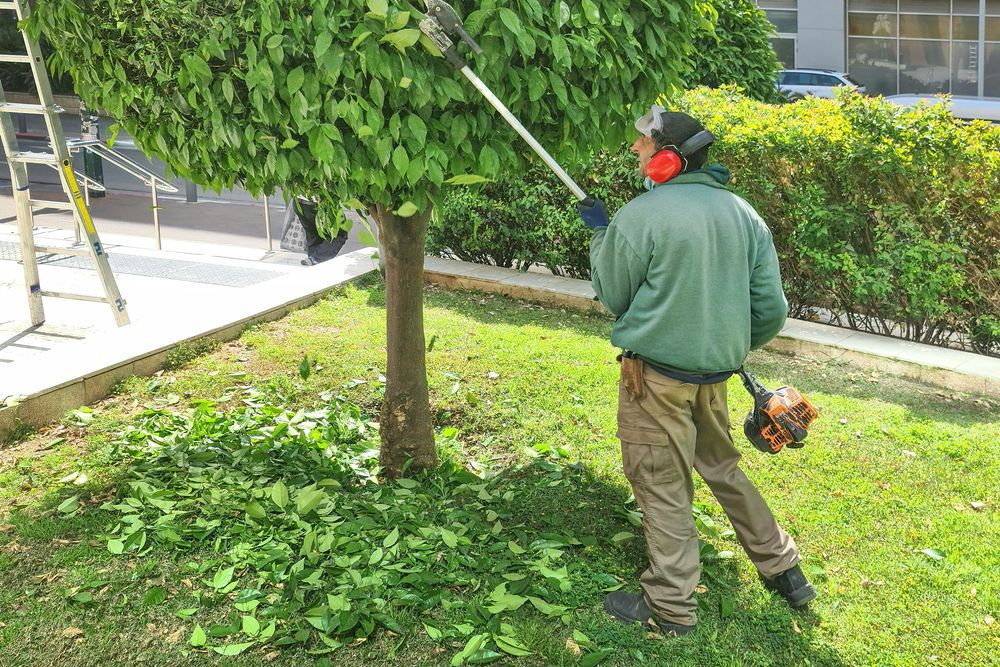
When a tree loses more than about a third of its canopy at once, it responds by pushing energy into rapid, structurally weak regrowth rather than maintaining the limbs and root system it already has. TX & NM Tree Service controls for this by pacing every trimming engagement: the crew identifies what can be removed safely at this visit, communicates that clearly, and schedules follow-up work once the tree has had time to stabilize. For large limbs that require sectioning, the rope is tied to a sound branch before any cut is made, so the limb path is controlled from the start rather than corrected after the fact.
After the work is finished, what you will notice most is a canopy that has been reduced without visible stubs or torn attachment points—cuts should be clean and made back to a lateral branch or collar, not left as open-ended spurs that die back and create entry points for disease. The space between the canopy and nearby structures also becomes measurable and intentional rather than incidental.
Trimming on properties near power lines may require coordination with the utility provider depending on how close the canopy is to the conductors, and that is a factor the crew identifies during the site walk rather than on the day of cutting. If your property has limbs already in contact with lines, note that when you request the evaluation so the correct equipment and approach can be planned in advance.
Common Questions About Tree Trimming Work
The questions below address how trimming is actually performed and what affects the scope of a visit. They are specific to the work itself rather than to scheduling or pricing.
What limits how much of the tree gets cut in a single visit?
The thirty-percent threshold is the industry-standard ceiling for canopy removal in one session, and it exists because removing more than that stresses the vascular system the tree depends on for recovery. Cutting beyond that limit produces rapid but structurally weak regrowth that often creates more work in subsequent years.
How are large limbs removed without damaging what is below them?
A rope is tied off to a sound branch before the cut is made, giving the crew directional control over where the limb travels as it comes free. Sections are cut at six to eight feet rather than removed all at once, which keeps the weight manageable and the drop path predictable.
Why does the owner assess each tree before cutting starts rather than simply following the customer's instruction?
Different species and individual trees have different tolerances for removal, and what looks like a reasonable request from the ground may overstress a particular limb union or remove too much from one side of the canopy. The assessment sets cuts that the tree can absorb without long-term structural damage.
What should you look for in a finished trim to know the work was done correctly?
Clean cuts made back to a lateral branch or the branch collar, with no stubs left protruding beyond the natural union. Stubs die back and create openings for fungal infection and insect entry, so their absence is the clearest indicator that cuts were placed correctly.
How does the proximity of houses and fences in Lubbock's older lots change how trimming is approached?
When a canopy overhangs a roofline or sits directly above a fence line, the crew cannot simply drop cut material—each section has to be lowered in a controlled path, which affects the sequencing of cuts and often requires a boom lift rather than ladder-and-pole work.
TX & NM Tree Service can walk your property and identify which limbs are candidates for removal now and which should be staged for a follow-up visit once the tree has rested. TX & NM Tree Service also performs tree trimming in Slaton, Wolfforth, Levelland, Idalou, and Clovis. Call (806) 789-4297 to arrange a property evaluation.