Sectioned Down When There Is No Clear Drop
Tree removal in Lubbock for properties where houses, fences, and neighboring lots prevent straight-line felling
Felling a tree in one drop requires a clear path at least as long as the tree is tall—a condition that exists on very few residential Lubbock lots where mature trees stand within reach of rooflines, privacy fences, and neighboring structures. TX & NM Tree Service removes trees by sectioning them down when no straight drop is available, using a rope tied to a sound branch to control where each section travels before the cut is made. Every job begins with a site assessment covering safety, access, and the equipment the removal will require, and every job is worked by a two-person crew.
The sectioning process works from the top of the tree downward, removing the canopy in six-to-eight-foot segments that can be lowered in a controlled path rather than dropped. The rope is tied before each cut, giving the crew directional control over the limb or trunk section as it comes free. Toby, with seventeen years of tree cutting experience, performs the cutting on every job, and the two-person crew structure means one crew member manages the rope and lowering while the other makes the cut—a division that is essential when a section is being brought down near a fence or roofline. On Tech Terrace lots where houses sit close together and fences occupy most of the available drop zone, this sequencing is standard rather than exceptional.
Contact TX & NM Tree Service to schedule a site assessment and get a clear picture of how the removal would be approached on your specific property.
How Tree Removal Is Sequenced on Constrained Lots
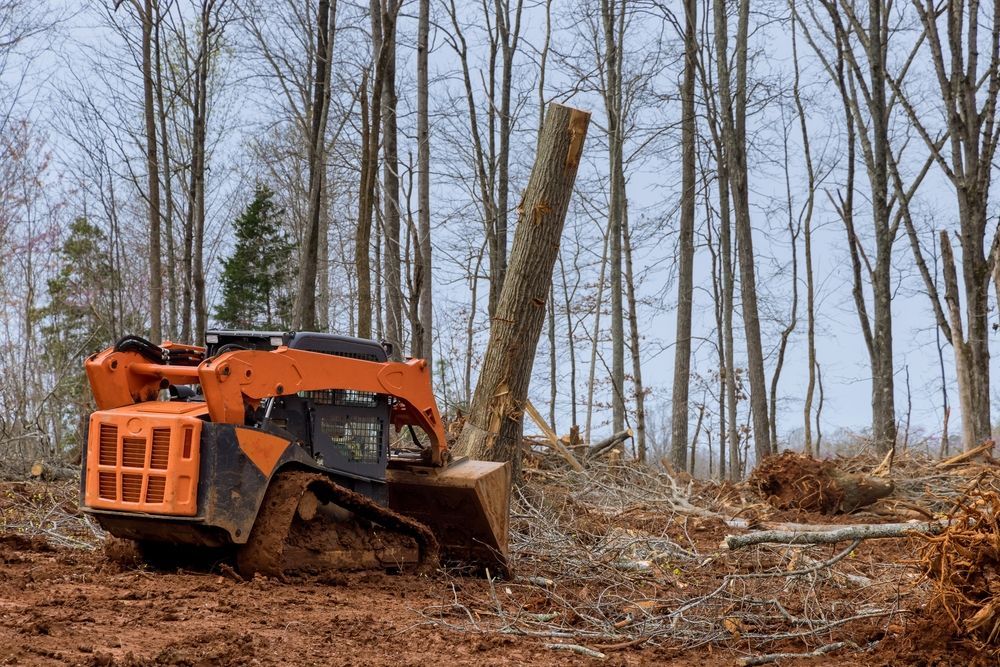
A tree removal assessment covers three things before any equipment is staged: whether a straight drop is possible, what access exists for the equipment required, and where each section of the tree will land once it comes free. When a straight drop is ruled out—which on most Lubbock residential lots it is—the crew plans the sectioning sequence from the top down, identifying which branches come off first to reduce weight and wind resistance in the canopy before the trunk sections are addressed. Rope placement is determined before the first cut is made, not adjusted after a limb is already in motion.
Once the tree is down and sections are cleared from the work area, what remains is the stump at grade and any surface root structure. The removal itself does not include stump grinding unless that is specifically included in the scope, so confirming what the quote covers before work begins prevents confusion about what the finished site will look like. The cleared footprint—with the canopy, trunk sections, and major limbs removed—is immediately visible and measurable once the crew completes the job.
Access for equipment is a variable that affects how the job is approached and should be part of the initial assessment conversation. Gate widths, overhead utility lines crossing the work zone, and soft ground near the base of the tree all affect what equipment can be brought in and how close it can be positioned to the trunk. Identifying those constraints during the site visit rather than on the day of removal is what allows the crew to arrive with the right equipment and a clear plan rather than improvising around obstacles.
What Property Owners Ask About Tree Removal
The questions below address how removal is actually performed and what site conditions affect the approach. They are specific to the work itself, not to scheduling or pricing.
How does the crew determine whether a tree can be felled in one drop or must be sectioned?
The crew measures the fall zone the tree would require and maps what sits within that zone: structures, fences, utility lines, and neighboring property. If any of those obstacles fall within the required clearance, the tree is sectioned down from the top rather than felled. On most residential Lubbock lots, sectioning is the standard approach.
What does rope control actually do during a sectioned removal?
A rope tied to a sound branch above the cut gives the crew the ability to guide the section away from structures as it comes free, rather than relying on the natural fall direction. The rope is tensioned by the second crew member during the cut so that when the section separates, its path is already defined.
How are six-to-eight-foot trunk sections chosen as the removal increment?
That length keeps each section at a manageable weight for controlled lowering while still making meaningful progress through the trunk. Longer sections become too heavy to direct accurately with a rope; shorter sections slow the job without improving control. The increment may be adjusted if a particularly large-diameter trunk section requires a shorter cut for safe handling.
What site conditions should be identified before a removal crew arrives?
Gate width and access path condition for equipment, the location of underground utilities near the base of the tree, overhead lines crossing the work area, and the condition of neighboring structures within the potential drop zone. Identifying these during the site assessment rather than on removal day determines which equipment is brought and how the crew approaches the first cuts.
What does the site look like once the removal is complete but before stump grinding?
The stump remains at or near grade with the root flare still visible at the surface. Trunk sections, limbs, and canopy material will have been cleared from the work area, leaving the footprint of the former tree open. Whether debris is hauled away or left for the homeowner to manage should be confirmed as part of the removal scope.
TX & NM Tree Service can assess your property, confirm the removal approach, and outline what the finished scope will include before any work begins. TX & NM Tree Service also performs tree removal in Slaton, Wolfforth, Levelland, Idalou, and Clovis. Call (806) 789-4297 to set up a site assessment.